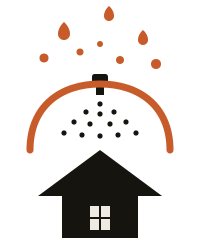
When the embers arrive, the house should already be ready.
CinderWatch is building an active wildfire-defense system for homes and businesses — and a new, evidence-backed way for fire agencies and insurers to see risk in wildfire-prone areas.
~90%
of homes lost in wildfires ignite from wind-blown embers, not the flame front itself.
Hours
of ember exposure a structure can face — long after responders have moved on or evacuation is ordered.
Rising
non-renewals and premiums are pushing insurance out of reach across high-risk regions.
Our mission
Protection that acts before the fire reaches the door.
Most wildfire loss isn't caused by a wall of flame — it's caused by embers that travel ahead of the fire and find their way onto roofs, into vents, and against walls. CinderWatch is built around that reality: detect the threat early, harden the structure on its own, and hold the line when no one can be on site.
We're an early-stage organization, and we're saying so plainly. The product is in development, the science is being validated, and the standards we want to meet are being written down before anything ships. This page is where that work becomes public.
Follow the buildDetect early
Sense rising ember and heat risk in time to respond — not after ignition has already started.
Defend the structure
Keep vulnerable surfaces wet and embers from taking hold across the critical hours of exposure.
Prove the risk reduction
Turn defensive action into the data fire agencies and insurers need to re-rate a property.
How it's meant to work
A loop that closes the gap between a home and the fire.
The aim is a single connected system — sensing, defense, and verifiable record — so a protected property can be understood differently by the people who insure and respond to it.
Watch the conditions
Monitor local fire weather and on-site signals so a property knows when ember risk is climbing — and can alert the people who care about it.
Harden automatically
Activate the structure's defenses to protect roofs, vents, and perimeters through the hours that matter most, with or without anyone present.
Record what happened
Capture a clear, tamper-evident account of conditions and the actions taken — the foundation for a credible risk profile.
Re-frame the risk
Share that record with fire agencies and insurers so a defended property is assessed for what it actually is, not just its ZIP code.
Who we want to build this with
Changing the picture takes the people who hold it.
CinderWatch is most useful when the data it produces is trusted by the institutions that price and respond to wildfire risk. We're actively seeking these partnerships as the system matures.
Fire & wildfire agencies
Shared situational data, defensible structures that ease the load on crews, and a common standard for what "prepared" really means on the ground.
Insurance & reinsurance carriers
Property-level evidence of active risk reduction — so coverage decisions and premiums can reflect a defended home, and so insurance can stay available where it's needed most.
Homeowners & businesses
The people on the front line: a system that protects what they've built and gives them standing in conversations about coverage and risk.
Researchers & standards bodies
Independent validation of the science and a transparent benchmark, so claims about protection are tested before they're trusted.
Where we are